
Please read our Terms & Conditions before reading this article. By continuing to read this article, you acknowledge and agree to the linked Terms & Conditions provided.
With the US Presidential Election beginning within a day or so, we can finally look forward to seeing an end to the scandalous campaign that it has been. Although I must admit it is entertaining to watch at times, I think I will be quite happy to see some different news headlines for a change. The United States, being arguably the most powerful and influential nation in the world, having a new leader is kind of a big deal. Whether you are a fan of Donald Trump or Hillary Clinton, or neither, there will be many people watching closely to figure out what implications it may have on the US and the rest of the world, including global financial markets.
The United States also happen to have the largest stock markets in the world, and all this political uncertainty over the US Election has spooked some investors. The S&P 500 index,
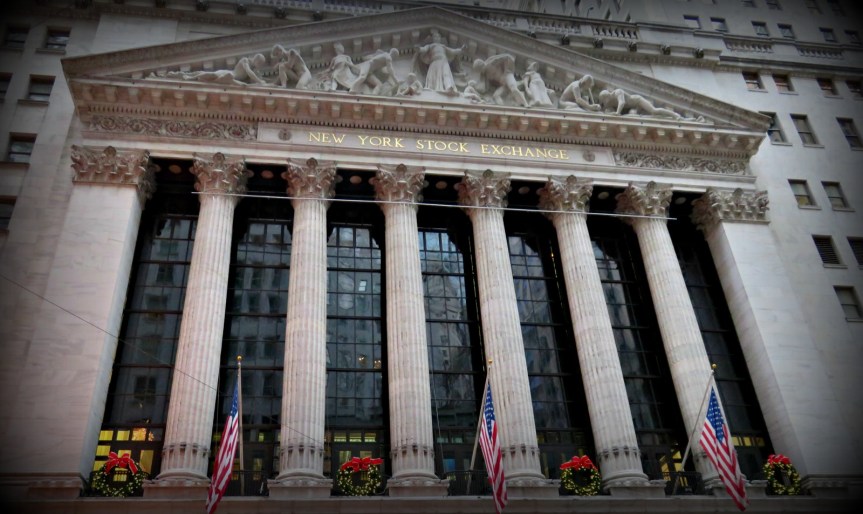
which comprises of the largest 500 companies listed on the New York Stock Exchange (NYSE) or NASDAQ, has fallen for nine consecutive days (last time this happened was over 35 years ago in December 1980). Interestingly, the value of the decline was nowhere near as bad as it sounds, losing a relatively modest -3.07% over that period.
What has also added to the weakness in US markets is the expectation that the US Federal Reserve could hike interest rates by the end of the year. The Chair of the Federal Reserve, Janet Yellen, has indicated that the US economy continues to be strong and interest rate increase is needed to prevent the economy from overheating and pushing inflation too high. Any rate increase from the current 0.5% will make the already flat stock market even less attractive. In the one-year period to 4 Nov 2016, the Dow Jones index only grew by 0.1%, and the S&P 500 index actually went backwards by -0.8%, with plenty of volatility in between.
Crude oil prices have been under pressure as well, with US crude oil inventories hitting an eight-week high after an increase of 14 million barrels in the week ended 28 Oct 2016. The market was only expecting an increase of 1 million barrels. Without any concrete plans from OPEC to freeze or cut oil production, it seems the supply glut will linger on for a while longer.
Back home in Australia, our share market has followed the lead from the US. Over the same period as the S&P 500’s nine-day losing streak, the Australian S&P/ASX 200 index fell -4.21%, with weaker oil prices impacting local energy stocks. Although the Australian market has bounced back 1.3% on Monday, along with other markets across Asia, it is hard to say whether the cloud of uncertainty over in the US will continue to send the Australian share market south. I will be watching the markets closely this week as further declines could present opportunities to buy good quality shares near the bottom of the cycle.

 INVESTCOST